Materials that are used for Awnings today
Awnings today are made from a variety of materials, each with its own benefits and drawbacks. Here are some of the most common materials used:
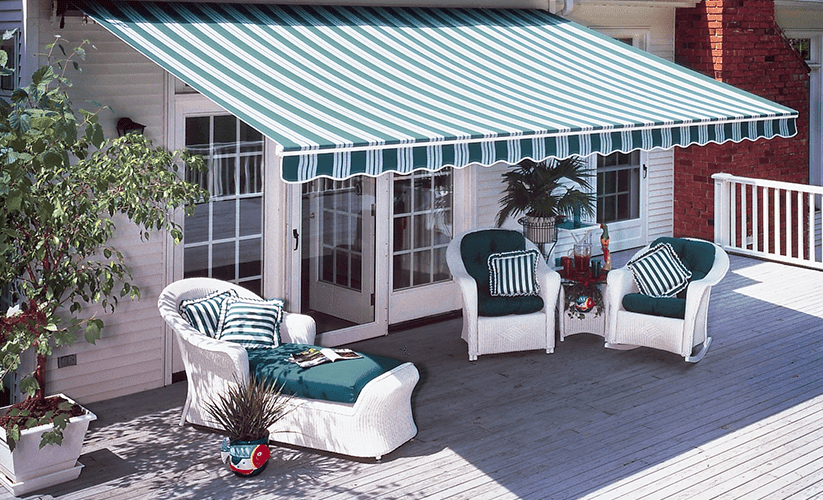
1. Vinyl:
Vinyl fabrics are available in two types – laminated and coated. The laminated type is considered the standard awning fabric as it’s strong, waterproof, and durable for medium to large awnings projects. Coated vinyl, on the other hand, is of higher quality and the most durable of all vinyl fabrics, thanks to its stain-resistant property1.
2. Acrylic:
Acrylic fabrics are more durable than traditional cotton blend canvas. Awnings made with acrylic fabrics offer an appealing design element and repel water but they should not be considered waterproof. Acrylic fabric awnings are great for homes located in humid areas; they resist mildew and ultraviolet light wear and tear2.
3. Polyester Vinyl Composite:
These fabrics offer durability and are waterproof. The vinyl fabric stays tight on the frame and is inherently fire retardant. The material is light and flexible2.
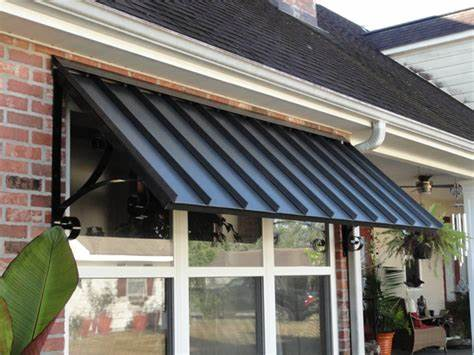
4. Metal:
Metal awnings are generally durable and have a long shelf life. However, they need a lot of overall maintenance to help prevent rust and can be easily damaged. They are heavier and more costly. In the summer they can act as a heat magnet12.
5. Other Natural Materials:
Awnings made from natural materials like wood and canvas can be used as well. Natural materials are cheaper but can be easily damaged and fall apart. Natural fiber awnings need to be replaced more often than their acrylic or vinyl, or vinyl polyester composite counterparts2.
Each material has its own advantages and disadvantages, so the best one for you would depend on your specific needs and preferences.